
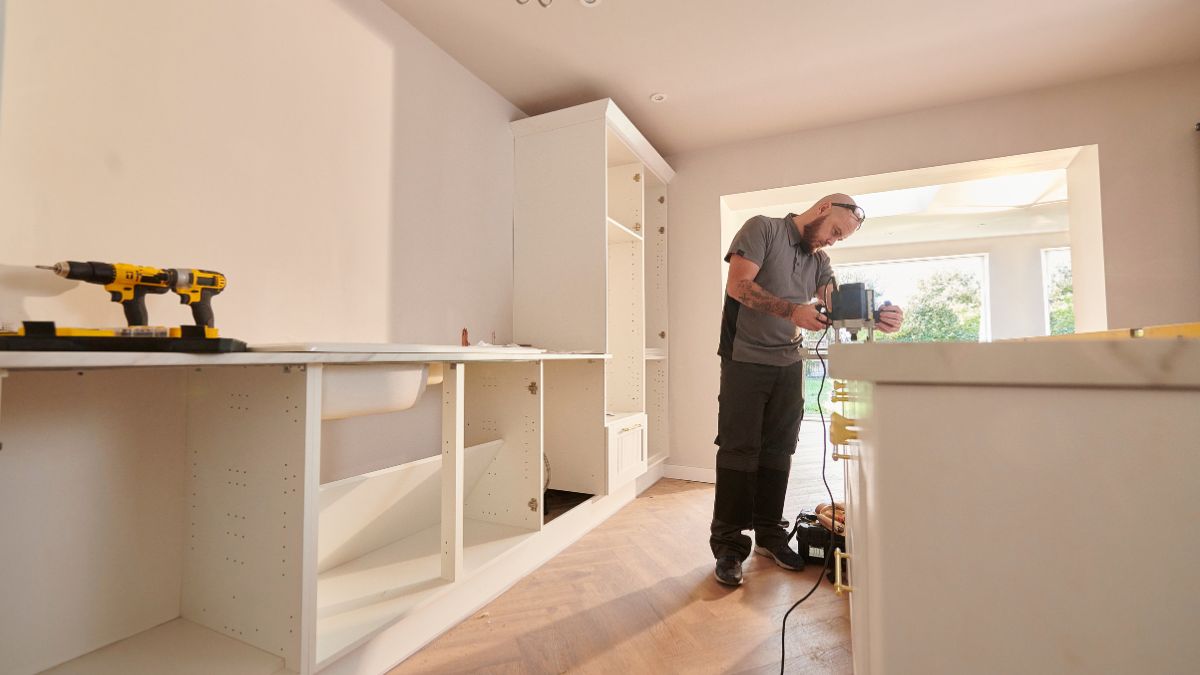
A full kitchen installation usually takes around 4 to 5 weeks from removal to final handover. Although if your project includes structural work, such as removing a wall, doing a kitchen diner knock through, or fitting new doors, it is more realistic to allow 5 to 9 weeks.
At Parker Kitchens, we’ve fitted over 1,350 kitchens from our Towcester showroom across Northampton, Milton Keynes, and the surrounding areas. Over the years, we’ve refined our kitchen fitting process into a smooth, efficient operation.
Self-managed projects, or installations carried out by less experienced fitters, may take longer. Below are our typical kitchen fitting timelines.
| Step | Stage of work | Typical timescale |
|---|---|---|
| Step 1 | Removal of the old kitchen | 1 to 2 days |
| Step 2 | Building or structural work (if required) | 3 to 7 working days |
| Step 3 | First fix: plumbing, electrics and gas | 3 to 4 days |
| Step 4 | Plastering and making good | 2 to 4 days |
| Step 5 | Underfloor heating (optional) | 2 to 3 days |
| Step 6 | Floor levelling (if needed) | 1 day |
| Step 7 | Main cabinet fitting | 4 to 10 working days |
| Step 8 | Flooring | 1 to 3 working days |
| Step 9 | Second fix: electrical | 1 to 2 days |
| Step 10 | Worktop installation after templating | 1 day |
| Step 11 | Second fix: plumbing | 1 to 2 days |
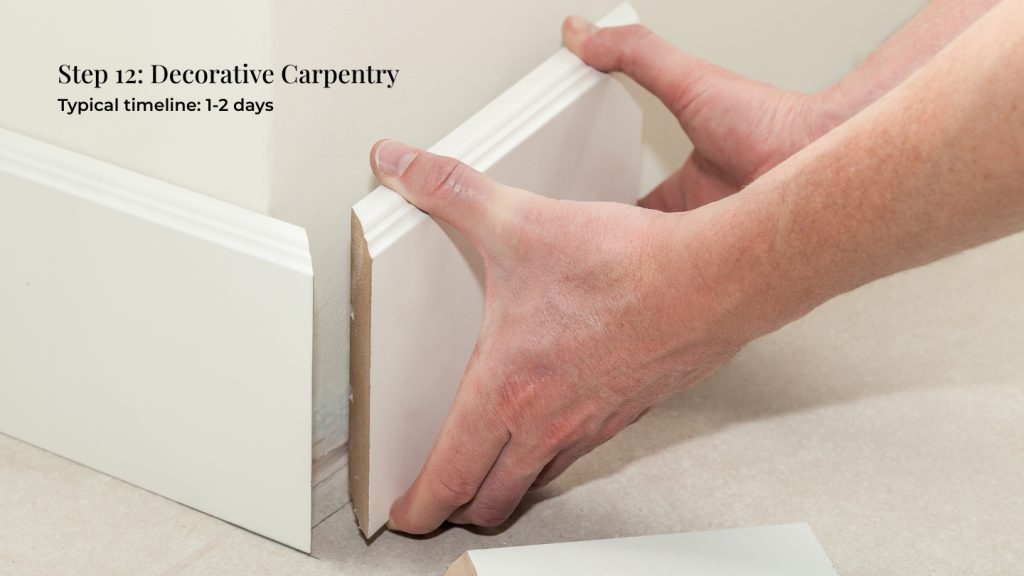
| Step 12 | Decorative carpentry | 1 to 2 days |
| Step 13 | Decorating and finishing | 3 to 5 days |
| Step 14 | Final clean and handover | 1 to 2 days |
| Total Time: | Straightforward kitchen installation | Around 4 to 5 weeks |
| Total Time: | Kitchen project with structural work | Around 5 to 9 weeks |
Every home is different, so the amount of time a full kitchen installation takes depends on the size of the room, the condition of the existing space, the amount of building work required and the finishes you choose. A straightforward replacement kitchen will usually be quicker than a project that involves structural changes, underfloor heating, or floor levelling for example.
At Parker Kitchens, your installation is fully project managed, with clear scheduling, site protection, tidy working and regular updates throughout the project. This reflects our focus on handmade cabinetry, fully managed installations and careful handover.
Step 1: Removal and disposal
Typical timeframe: 1 to 2 days
The first stage is to remove the existing kitchen and strip the room back ready for work to begin.
This usually includes removing:
- Existing cabinetry
- Wall coverings
- Floor coverings
- Old appliances
- Unwanted fixtures and fittings
Any areas of flooring that are not being renovated will need to be protected with floor coverings before work begins. If the room has an artex ceiling, this may also need to be removed at this stage, as plaster will not always bond properly to artex.
The aim is to create a clear, bare shell so the next trades can work properly and the new kitchen has the best possible foundation.

Step 2: Building and structural work
Typical timeframe: 3 to 7 working days
Structural work can vary significantly depending on the project. Some kitchens need very little building work, while others involve removing walls, adding doors or changing the layout of the room.
This stage may include:
- Removing an internal wall
- Adding bi-fold doors
- Installing French doors
- Fitting external doors or windows
- Moving or replacing internal doors
- Creating new openings
- Making changes to internal or external walls
As a guide, fitting internal doors may take around one day for two doors. External doors and windows are usually around one day per item. Wall removal is typically around 3 to 4 days, depending on the structure and the support required.
This is one of the reasons a kitchen installation with structural work usually takes longer than a simple refit.
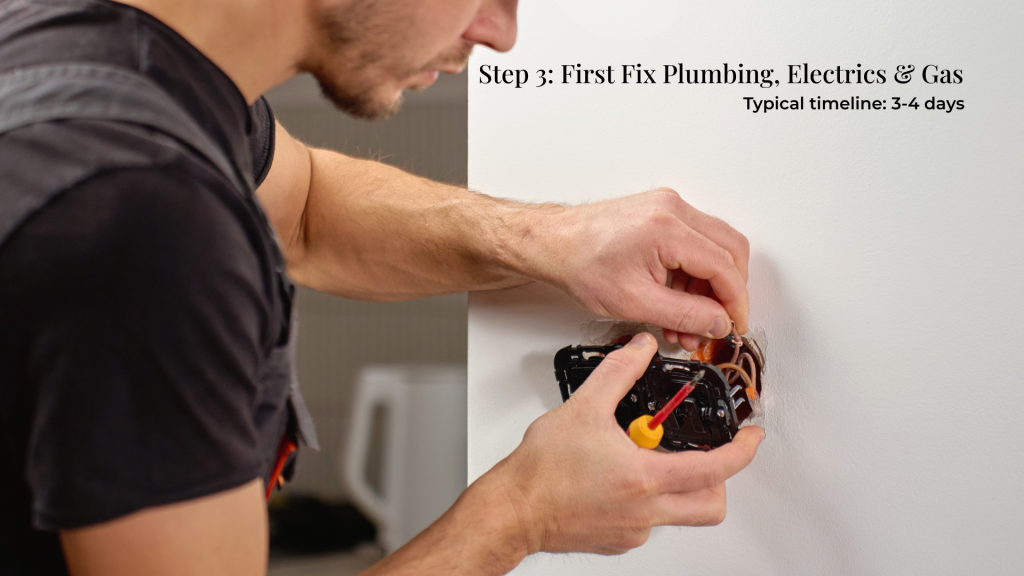
Step 3: First fix plumbing, electrics and gas
Typical timeframe: 3 to 4 days in total
First fix is when the main services are prepared before the room is plastered and finished.
For plumbing, this may include moving or refreshing pipework, hiding old external pipework within the wall, moving radiator pipes, preparing hot and cold water supplies and adding pipework for a plumbed kitchen island.
Electrical first fix can include:
- Moving or adding sockets
- Cabling for under-cabinet lighting
- Cabling for appliances
- Ceiling lighting and pendant positions
- Underfloor heating connections
- Pop-up sockets
- Speaker systems
Gas work may also happen at this stage. This could include preparing pipework for a gas hob, boiler or fireplace. If you are changing from gas to induction, the gas supply can be capped and certified.
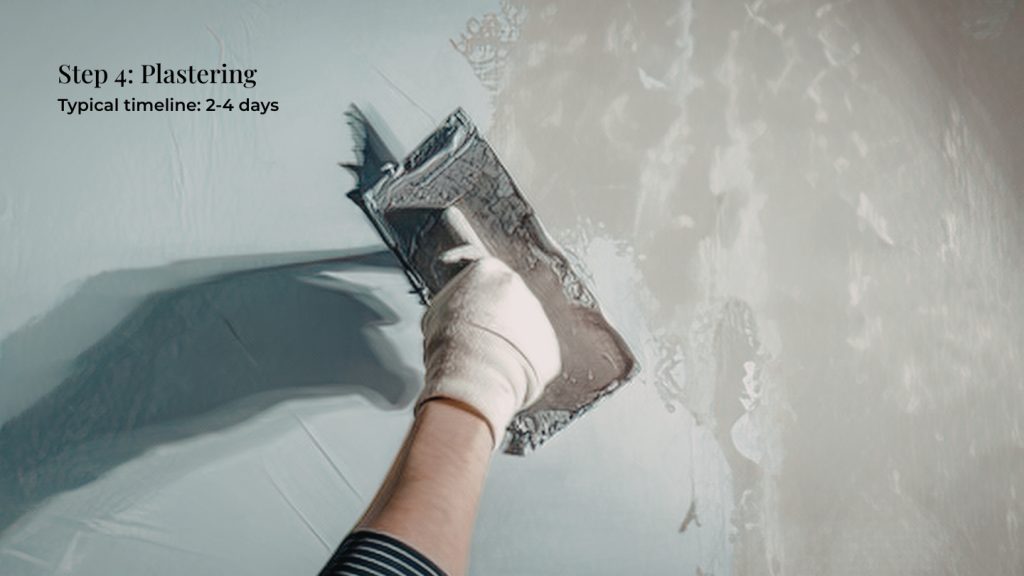
Step 4: Plastering
Typical timeframe: 2 to 4 days
Once the first fix work is complete, the room can be prepared for plastering. This may involve battening, plasterboarding and making good any chases created for plumbing or electrics.
Plastering usually includes:
- Ceilings
- Walls
- Electrical and plumbing chases
- Areas affected by building work
This stage is important because it creates a clean, even finish before flooring, decorating and kitchen installation begin.

Step 5: Underfloor heating
Typical timeframe: 2 to 3 days
This stage is optional, depending on the project.
If underfloor heating is being installed, it would usually be laid before the floor is levelled and finished. For tiled floors, a decoupling mat may also be fitted. This helps reduce the risk of tiles cracking in the future by allowing for small amounts of movement beneath the surface.
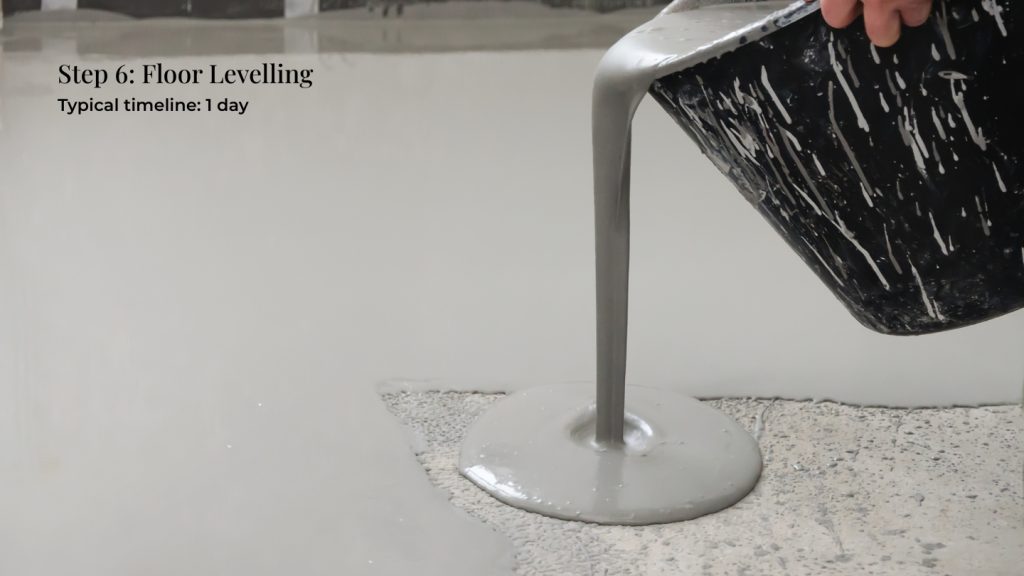
Step 6: Floor levelling
Typical timeframe: 1 day
Before the final floor covering is laid, the floor usually needs to be prepared with a self-levelling latex compound. In many cases, two coats are used to make sure the floor is properly level.
This gives the finished flooring a better surface to sit on and helps prevent issues later.
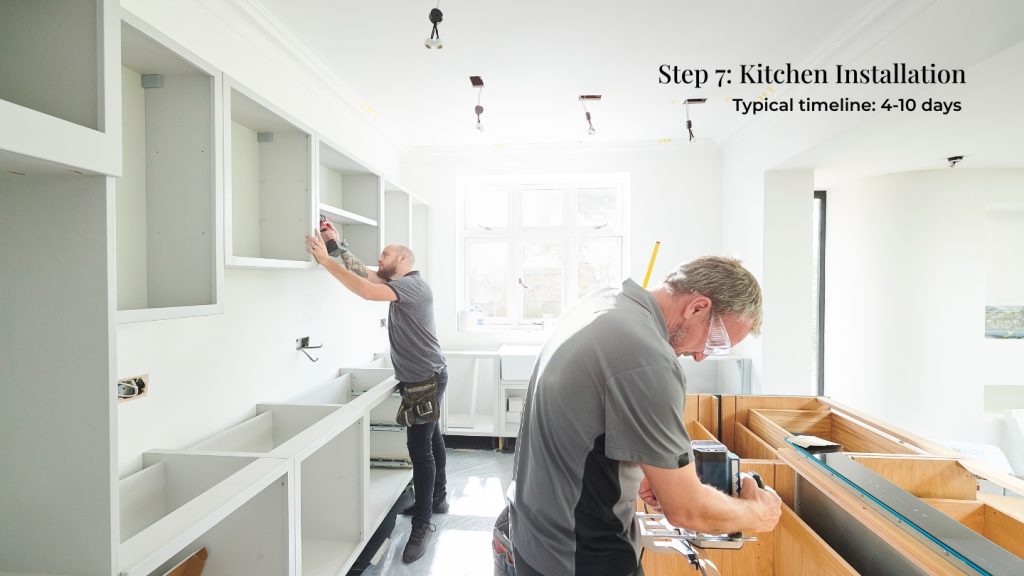
Step 7: Kitchen installation
Typical timeframe: 4 to 10 working days
The kitchen installation itself usually takes around one week, although larger or more detailed kitchens may take longer.
This is the dry fit stage, which may include fitting:
- Kitchen cabinets
- End panels
- Decorative panels
- Cornice and pelmet
- Appliance housings
- Doors and drawer fronts
- Internal storage
- Worktop supports and finishing details
Appliances may be positioned during this stage, but they are not usually fully connected until the second fix.
Once the cabinetry is in place, stone or solid worktops can be laser templated. This includes any upstands and splashbacks. Worktops are then manufactured to fit the room precisely before returning for installation.
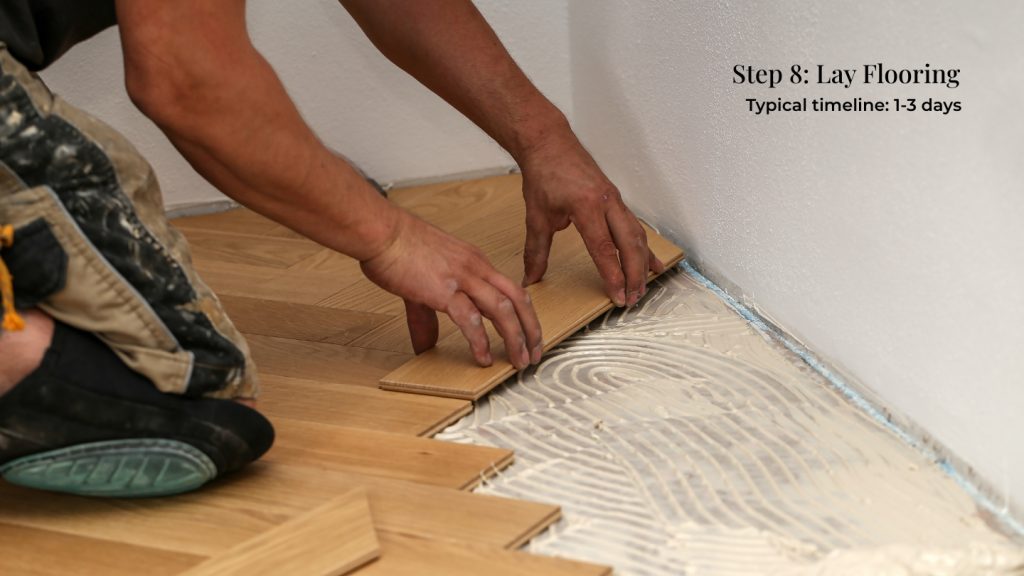
Step 8: Flooring
Typical timeframe: 1 to 3 working days
For LVT flooring, such as Karndean, the flooring is usually laid after the kitchen cabinetry is installed. Once fitted, the floor and worktops should be protected with coverings while the remaining trades finish the project.
If you are having tiled flooring, this is usually completed corner to corner before the kitchen is installed. This gives a continuous tiled finish beneath the cabinetry.

Step 9: Electrical second fix
Typical timeframe: 1 to 2 days
Electrical second fix is when the visible electrical items are connected and finished.
This may include:
- Fitted appliance connections
- Light switches
- Plug sockets
- Under-cabinet lighting
- Spotlights
- Pendant lights
- Speakers
This is when the kitchen starts to feel much closer to completion.
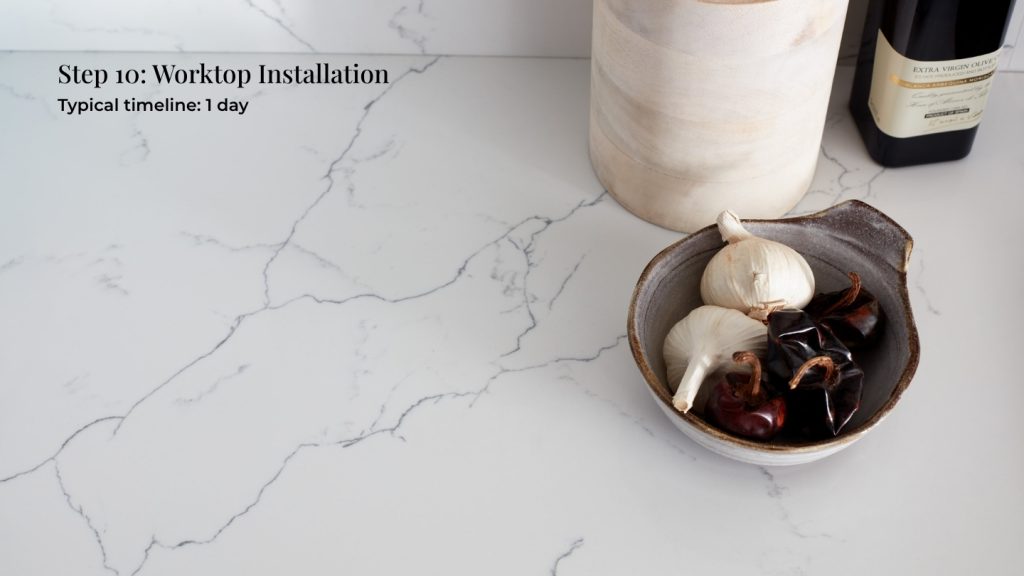
Step 10: Worktop installation
Typical timeframe: 1 day
Once the worktops have been manufactured from the laser template, they can be installed along with any splashbacks and upstands.
If you are having an induction hob, the electrician will usually return at this stage to fit and connect it.
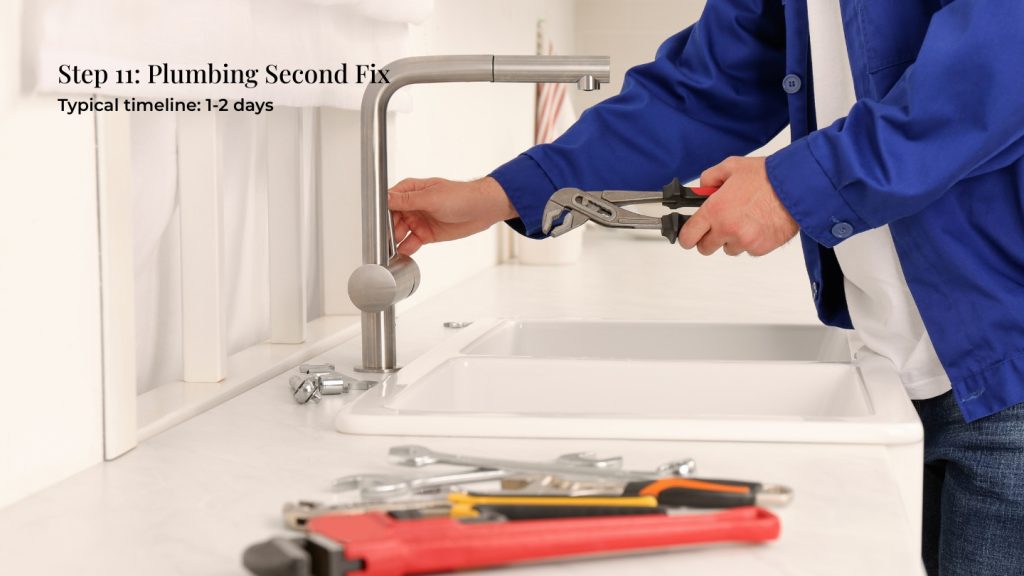
Step 11: Plumbing and gas second fix
Typical timeframe: 1 to 2 days
Plumbing second fix is when the main water and gas items are connected.
This may include:
- Sink installation
- Tap installation
- Gas hob connection by a Gas Safe engineer
- Radiator installation
- Appliance water connections
- Waste connections
At this stage, the kitchen becomes functional as well as fitted.
Step 12: Decorative carpentry
Typical timeframe: 1 to 2 days
Decorative carpentry helps finish the room properly. Depending on the design, this may include:
- Skirting boards
- Architraves
- Door frames
- Wall panelling
- Final timber details
These details help the new kitchen feel properly integrated into the rest of the home.

Step 13: Decorating
Typical timeframe: 3 to 5 days
Decorating is one of the final stages and can include painting:
- Walls
- Ceilings
- Doors
- Skirting boards
- Architraves
- Wall panelling
- Window frames
Good decorating takes time, especially when there are several surfaces and finishes to prepare. It is worth allowing enough time for proper preparation, drying and finishing.

Step 14: Final clean and handover
Typical timeframe: 1 to 2 days
The final stage is the clean, inspection and handover.
This usually includes:
- Removing protective floor coverings
- Cleaning inside and outside the units
- Sweeping, dusting and polishing
- Checking doors, drawers and fittings
- Reviewing the finished kitchen
- Completing any final snagging
- Providing care information for appliances, worktops and flooring
A good handover should leave you with a kitchen that is clean, checked and ready to use.
How long does a kitchen installation take in total?
For most kitchen installations, a realistic guide is:
Standard kitchen project: 4 to 5 weeks
Kitchen project with structural work: 5 to 9 weeks
This includes removal, preparation, first fix trades, plastering, flooring, kitchen fitting, worktops, second fix trades, decorating and final handover.
Some projects may be quicker, particularly if the room is already in good condition and the layout is staying the same. Others may take longer if there is complex building work, specialist finishes or changes to the structure of the property.
What about kitchen extensions?
Kitchen extensions should be treated separately from a standard kitchen installation. They can take anywhere from 2 months to a year, depending on the scale and complexity of the work.
This is because an extension may involve:
- Architectural drawings
- Structural engineer approval
- Planning applications
- Building control
- Groundworks
- Brickwork
- Roofing
- Windows and doors
- Material availability
- Staff and trade availability
- Weather delays
- Final kitchen installation and finishing
A simple extension may be completed within a few months. A more complex project, especially one involving planning permission, structural changes or specialist materials, can take much longer.

Why planning is key to a smoother kitchen installation
A kitchen installation involves several trades working together, and one delay can affect the next stage, so a realistic schedule is essential.
This is where we find that a fully managed kitchen installation service makes a real difference. Instead of arranging separate trades yourself, your project manager coordinates the programme, keeps the work moving and makes sure each stage is ready before the next begins
Planning a new kitchen?
At Parker Kitchens, we design, make and install bespoke kitchens from our Towcester workshop, with every stage properly managed from first sketch to final wipe-down.
Request your free design and quote to tell us about your space and we will talk you through the likely schedule, explain what needs to happen and provide a clear, written quote.